Pages

Showing posts with label Structures. Show all posts

Wednesday, October 19, 2005

Oneida Stake Academy

Preston, Idaho
Oneida Stake Academy
GPS Coords:
Address: Recently moved to Benson Park


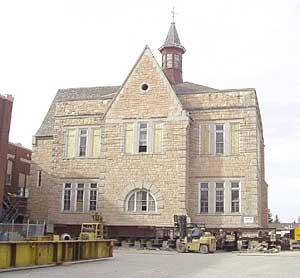
The Oneida Stake Academy was built in 1890 -1894 by German immigrant John Nuffer at a cost of between $46,000. The church architect Don Carlos Young drew up the plans for the building. The cornerstone was laid on July 2, 1891 and President George C. Parkinson offered the dedicatory prayer. The building was finally completed in 1894; it was dedicated by Moses Thatcher who was in the council of the twelve apostles. The academy was one of the premiere primary and secondary schools in the northern Utah-southern Idaho area for several decades. It was the center of education for the region between Franklin and Pocatello at one time.
The Academy helped educate several LDS Church leaders, including Harold B. Lee and Ezra Taft Benson were educated there. Another notable name to emerge from the academy was Samuel P. Cowley. Now known as a famous FBI agent, he was killed while trying to arrest notorious mobster "Baby Face" Nelson.

The academy is believed to be the oldest of 35 such academies built between 1888 and 1909 at scattered locations around Utah, Idaho, Wyoming, Arizona, Mexico and Canada. The academies were forerunners to the LDS Church Educational System and seminary program. It was first dedicated 109 years ago by LDS apostle Moses Thatcher. Other academies built at the time were the Bannock Stake Academy, Sanpete, St. George and Brigham Young. Those schools went on to become Brigham Young-Idaho, Snow College, Dixie State and BYU respectively after the church abandoned the academy system in 1922.

The academy has once again made history in 2003 when it was moved, in one piece, to its new home in Benson Park in the city center of Preston. As far as we know, the Academy is the largest, highest, and heaviest building to be moved intact in U.S. history.

Friday, October 07, 2005

Chesterfield Pioneer Ghost town


Chesterfield, Idaho
Pioneer town
GPS Coord: N 42°51.576 W 111°54.36

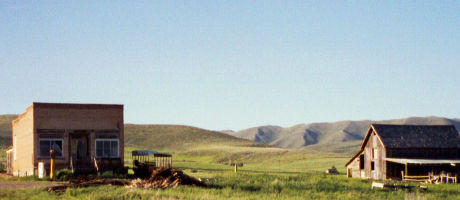
Chesterfield is an early pioneer settlement established in 1880 that is now unoccupied. It was originally said to be named for founder Chester Call; others said it was named for his birthplace Chesterfield, England. The Oregon Trail passed through the town, and the settlers helped travelers who at this point were tired, or ill. The town grew to some 400 people, but eventually the changing world brought about its abandonment. The Oregon Trail fell into disuse, the railroad and main roads passed far to the south by Idaho Falls.
A visit to Chesterfield is a unique trip back in time and a chance to experience the rural agricultural life of a community whose deep faith helped them endure the hardships of life on the frontier. There are 27 structures overlooking the beautiful Portneuf Valley near Bancroft. Chesterfield is being restored by descendents of the early settlers and volunteers. The meeting house now is a museum and tours are available.

Address:
From Interstate 15, head east on US Highway 30 towards Soda Springs, Idaho. About five miles past Lava Hot Springs, Idaho take the local road to Bancroft, Idaho. Continue for another ten miles north to a town time has forgot, Chesterfield.

Sunday, July 10, 2005

Wilford Woodruff Home


Randolph, UT
Wilford Woodruff Home
GPS Coord: ?

This house is in Randolph, Utah on main street. I don't really know when or for how long Wilford Woodruff lived there, but he did live there for a time. If you know anymore information let me know.

Monday, June 27, 2005

Paris Idaho Tabernacle

Paris, Idaho
Paris Tabernacle
GPS Coord: ?

Tabernacle construction didn't start until 1884, after the temple in Logan, Utah, was completed. The Romanesque Revival, red sandstone tabernacle was based on the designs of Young's son, Don Carlos Young, and includes his trademark non-identical towers on either side of the 80-foot tower hovering over the building front.
The red sandstone was quarried from the east side of Bear Lake and transported -- sometimes over the frozen lake -- 18 miles by ox and cart back to the construction site. Much of it was brought to Paris 20 years before construction started and stored until needed.
The tabernacle is just over 127 feet long, 73 feet wide, and it's 110 feet to the tallest spire. Among the many European descendants who lent their individual skills to make the tabernacle unique was James Colling Sr. He borrowed from the designs of the hulls of sailing ships he built in England for the intricate woodwork of the distinctive ceiling.
It cost $50,000 to build, and much of the work was completed by townspeople who could have been all consumed with building their own homes and infrastructure for the town, which has grown to about 550 people living about 15 miles north of the Utah border.
"So obviously it was a matter of great importance to them," said Crawford. "The workmanship, it's just second to none."
Even though the Mormon religion was still young -- the tabernacle's 1889 dedication came only 59 years after the first printing of The Book of Mormon -- he said those that built it "expressed their testimony in their work."